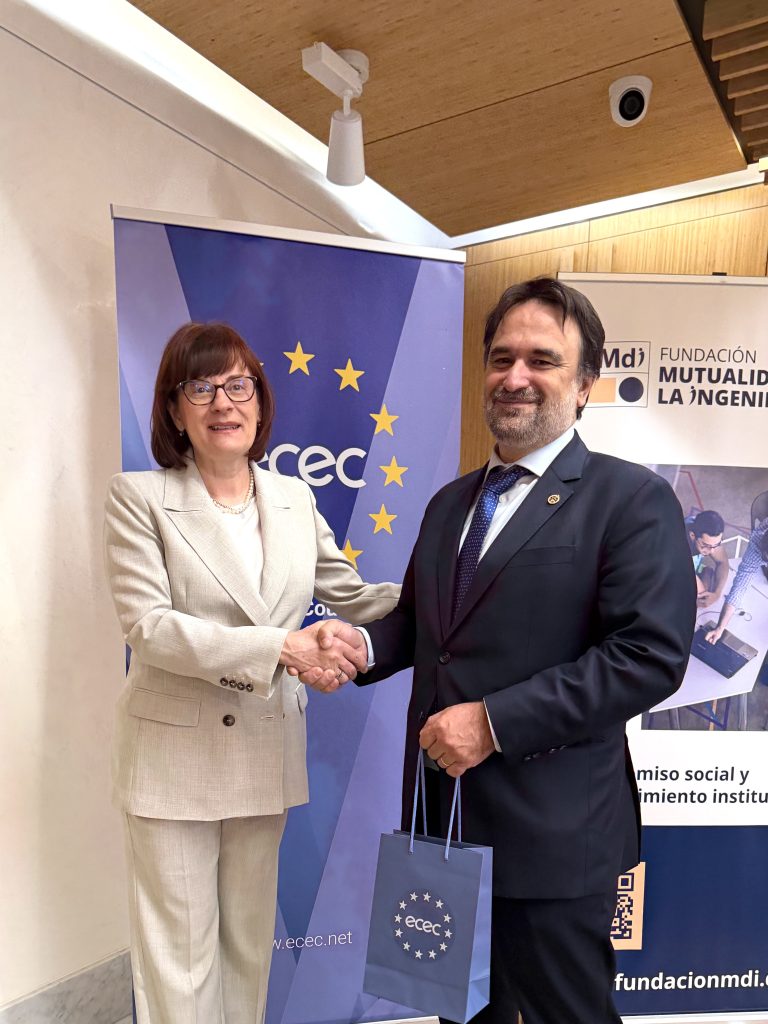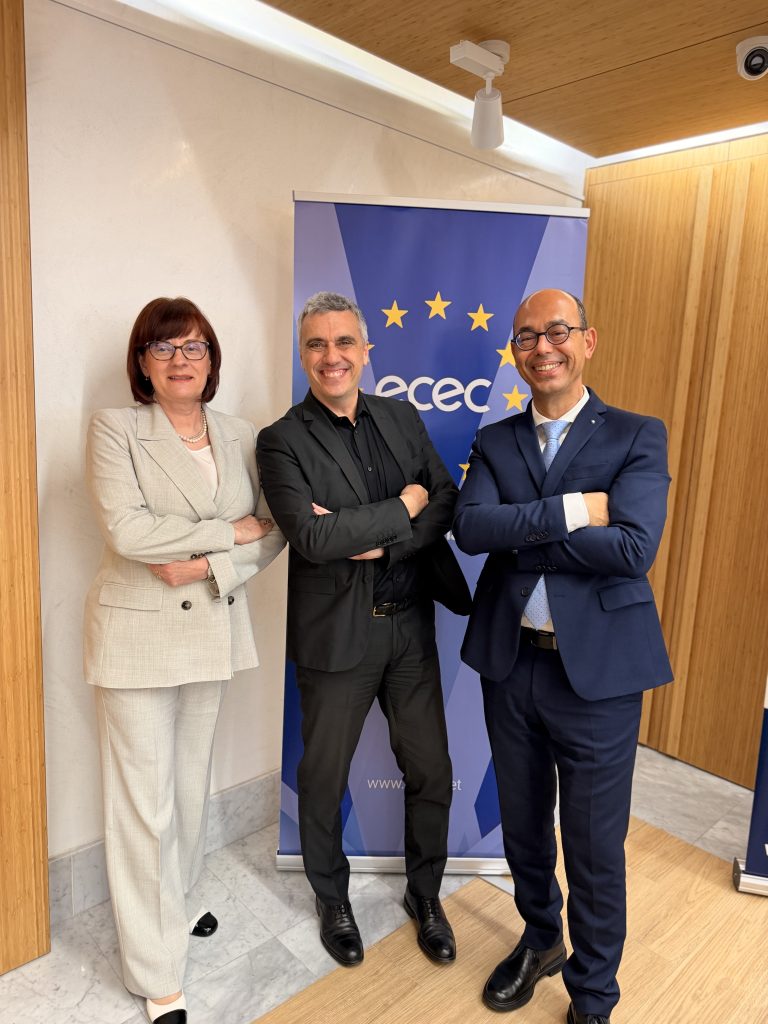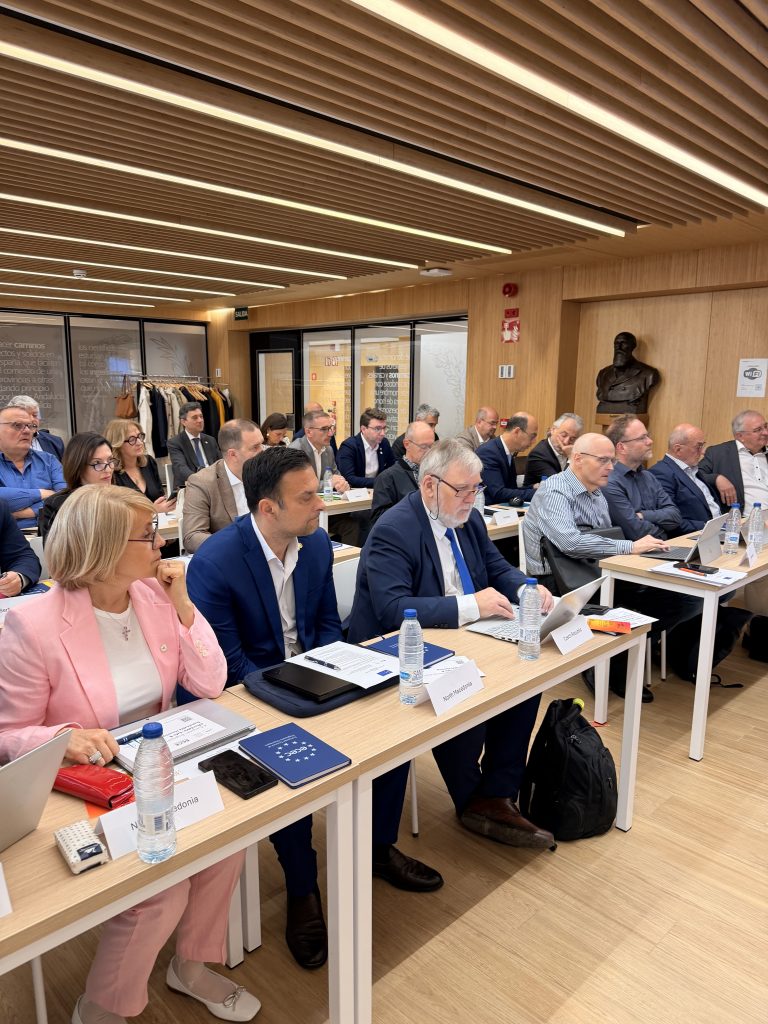
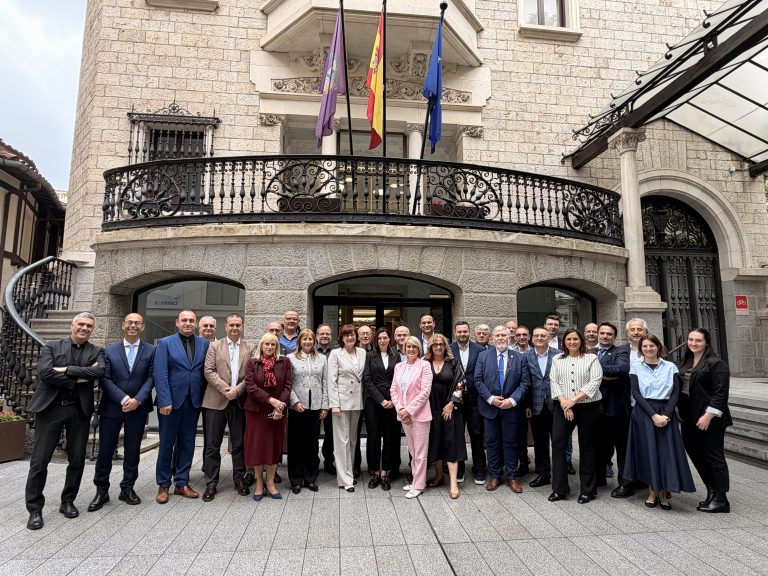
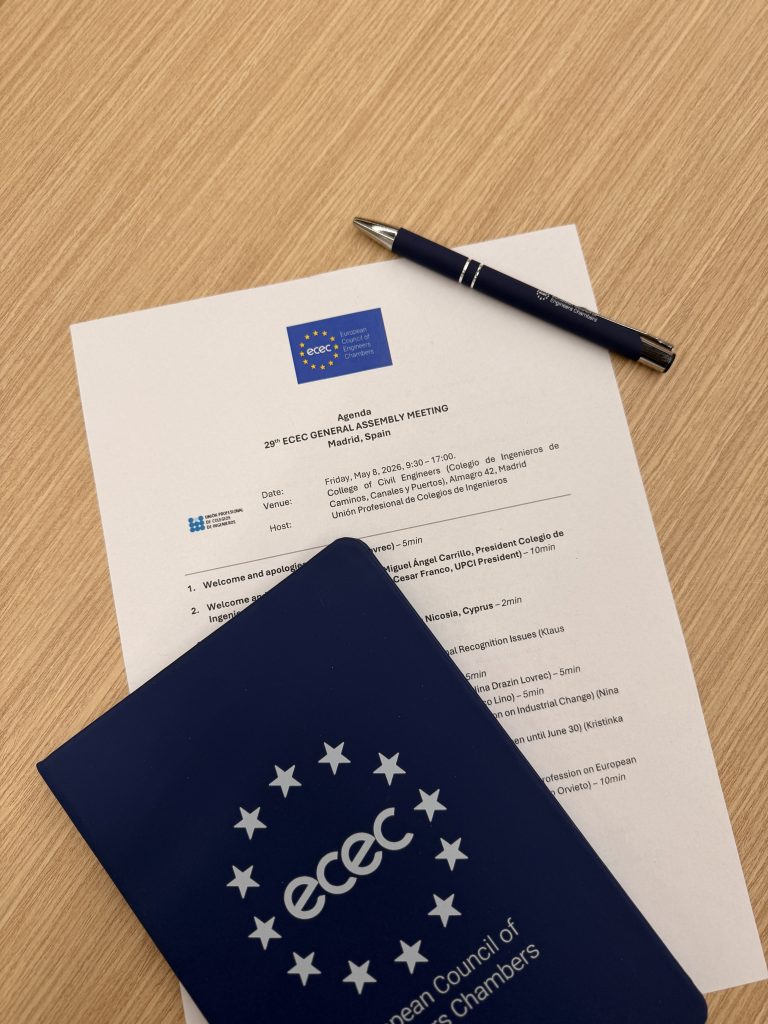
Madrid, May 8 — The European Council of Engineers Chambers (ECEC) convened its 29th General Assembly of Members (GAM) in the Spanish capital, bringing together representatives of its member organisations to address pressing challenges and future priorities for the engineering profession across Europe. The meeting was hosted by the Unión Profesional de Colegios de Ingenieros (UPCI) and the Colegio de Ingenieros de Caminos Canales y Puertos.
Opening the session, ECEC President Nina Dražin Lovrec highlighted key achievements since the organisation’s previous assembly in November, including the publication of a joint ECEC–ECCE policy paper outlining a A European Engineering Vision for Affordable, Safe and Sustainable Housing. She also pointed to the recent ECEC – ECCE Roundtable event held at the European Parliament and hosted by MEP Nikolina Brnjac as a milestone in strengthening dialogue between engineers and policymakers. A joint declaration emerging from that event is expected to formalise commitments to a coordinated European approach to housing, aiming to accelerate delivery of high-quality and accessible housing solutions. Housing remained central theme throughout the meeting. Delegates engaged in extensive discussions, with César Franco, President of the UPCI presenting Spain’s perspective on industrialised construction methods.
Public procurement also featured prominently on the agenda. The Ordre des Architectes et des Ingénieurs-Conseils Luxembourg (OAI) showcased the Quality-Based Selection guide (qbs.lu). The initiative forms part of broader efforts in Luxembourg to reform procurement systems by prioritising quality criteria and simplifying procedures for awarding project management services.
Discussions further addressed the role of engineering in Europe’s preparedness strategies. Lovrec outlined ECEC’s contributions to a draft opinion by the European Economic and Social Committee, specifically through its Consultative Commission on Industrial Change, on a roadmap for European defence readiness. Filip Pachla delivered an overview of the protective structures in Poland including a comprehensive overview of shelters and concealments.
Another key topic was professional recognition and education. Member organisations discussed ongoing efforts to promote a Common Training Framework for civil engineers and were encouraged to support the next phase of a study mapping regulatory standards, qualifications, and training requirements across EU member states. Participants agreed on the need to further strengthen the visibility of the engineering profession and on the importance to attract the young generation. ECEC member organisations committed to provide information on the situation of engineering education in their respective country.
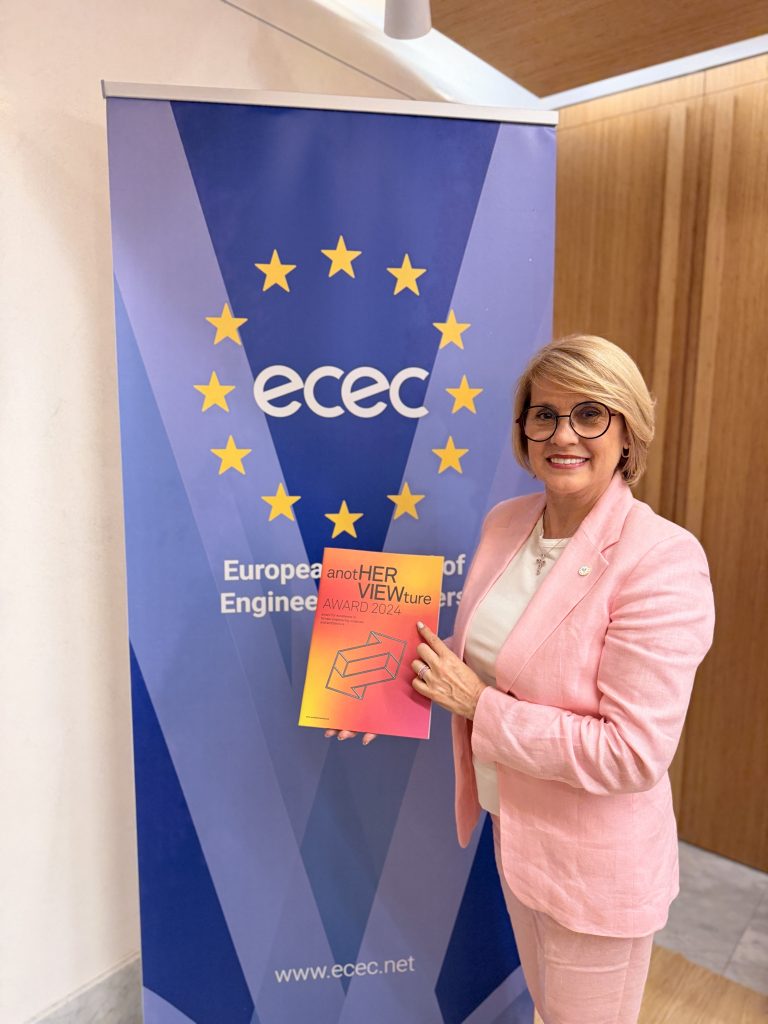
Kristinka Chulak presented ECEC’s support of the anotHERVIEWture award initiated by the Austrian Federal Chamber. Female engineers and architects are welcome to submit their projects until June 30. She and Nina Drazin Lovrec serve as jury members, which is made up of nationally and internationally renowned female architects and engineers.
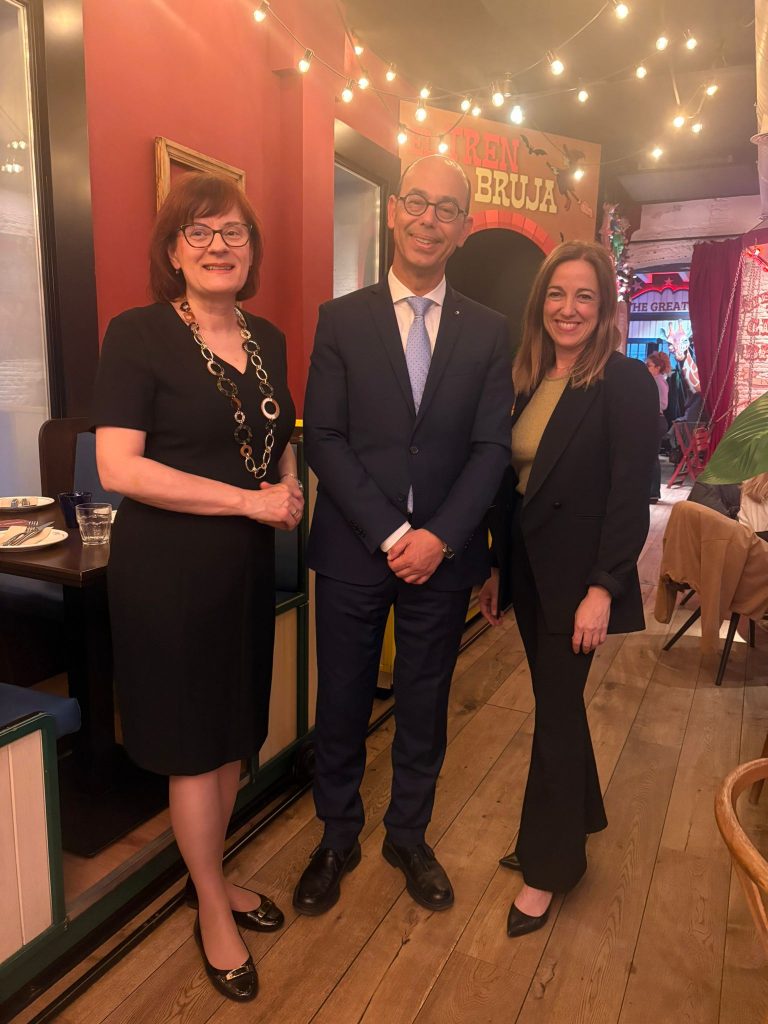
The assembly also underscored the importance of collaboration within the sector. Participants welcomed Platonas Stylianou, President of the European Council of Civil Engineers (ECCE), and Esther Ahijado of Enginet – European Engineers, who presented the organisation’s activities, while Inés Ferguson, President of the European Federation of Engineering Consultancy Associations (EFCA), joined attendees for the official dinner.
The ECEC expresses its appreciation to the Spanish hosts and Juan Blanco, Spanish ECEC Executive Board member for organising the GAM and confirms that the next General Assembly Meeting will take place on November 5–6 in Dubrovnik.